Sunday, September 30, 2012

The things they teach you in vet school 2

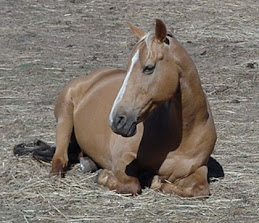
"The ungulates, being those animals with hoofs on the menus of those animals with claws, have adapted in many specialist ways to get away really fast from said animals with claws. This is because they cannot take other measures, such as flying or climbing trees."


Although not for lack of trying:


Saturday, September 29, 2012

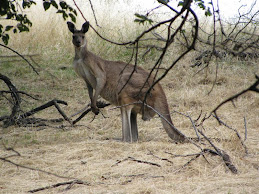
Camo kangaroo


Spot the kangaroo in this picture. Find it, I mean, not that its name is Spot.


Friday, September 28, 2012

Hi honey!

The bees struggled through the summer with less sunlight this past year, but as it was their first summer with us we didn't mind their lack of production too much. We've also learned a lot about the types of trees, shrubs and flowers to plant to ensure a year-round supply for them. Pity we only learned about it. On the five-year plan is to collect said plants and get them in the ground. Its called the five-year plan because things on it take five years to get around to.


The other problem is our honey extractor although the first problem, acquiring one, is overcome. It needs a new belt, a good clean and a general overhaul but as the honey flow didn't, we haven't done these things. They seem hardly worth it with so many other pressing jobs, so the extractor is on the five year plan too. We did manage to get some honey from several filled frames without robbing the bees too much, and from draining cappings in a net. Honey held aloft to the light here in homage to the bounty of the flowers and the work of the bees in an attempt to show its glorious colour. Such a goldmine, an extravagant two whole jars!


Thursday, September 27, 2012

Weird Weather

The last summer was a little uncharacteristic of our climate. Generally described as "Mediterranean" but without the Greek Islands, it involves long, hot, sunny, dry, days from about November to March. This is also the Fire Danger Season, roughly, capital letters because it is such a dangerous time that it has its own set of laws, warnings, actions and reactions. Government agencies and emergency services do things differently. Dates are set and policed regarding the use of everything with a naked flame and many things without, including bird scarer guns, bee smokers and national parks. Not without good reason.

The above is a scanned print from a photo taken by the owners of this house 40 years ago, during one of South Australia's worst disasters, known forever after as Ash Wednesday. The photographer was standing on our front verandah at the the time. Amazingly the big pine in the foreground is still there (I've probably jinxed it now). Because it had been such a bad drought, and this is sheep country, the fire here had little fuel and was relatively small until it got into scrub. Not so in the rest of the Adelaide Hills, South East and many other parts. It seemed as if the whole state was alight and so was Victoria. 28 people died here.

Firefighters would look at this fire and say yes, it's certainly fightable, small flames, trickling downhill, smoke in the other direction and open country between it and the house. Many fires that day were not even approachable, what is the problem? No problem, but no fire truck came near the place that day or afterwards, until damage reconnaissance was finally managed several days later. The Country Fire Services were overrun, as was everyone, and this little area was deemed at less risk than houses near the forests. Not enough firefighters, trucks, or water. With flames this close evacuation is more dangerous than staying, so the owners sensibly put their horses on a clear patch of ground behind the house, their kids inside and did what they could with the 4 feet of water left in their single rainwater tank. They all survived.

Since then we've had the odd fire, only last week a controlled burn off threw off its controlled status with abandon and burned happily into a few acres of gorse and blackberry just over the hill from here, until it was chastened and rounded up by the local brigade. That this can happen in early spring, with the rain we've had this year, is indicative of the usual situation in SA. The fire below was burning in forest to the west of our local township. All hands on deck for that one.


Last summer, however, it was more storms than usual, more rainfall than usual and more humid than usual. It rained intermittently, a most unusual occurrence, even though the temperatures did not drop. These are the flat cropping lands to the east of the ranges before curing last year:


Here at home we had some dramatic storms as well. Even though our usually tawny hills were still tinged with green because of it, the natural fear of lightning strikes put everyone on alert,


if only to wish for relief from the heat and humidity.


Wednesday, September 26, 2012

Imogen the Impaler

This is Imogen, an easy-going young ewe who was limping ever so slightly one day last summer. It was one of those stormy summers more suited to equatorial Africa than South Australia, so when SO spotted this black, gummy substance on her left front foot leg he feared flystrike (despite the extremely odd location) and tipped her up for a look.


Demonstrating how sheep are stoics when it comes to injury, lest the wolves or jackals hiding in the scrub should single them out for a meal, what we discovered under her ovine armpit was a rather large and nasty wound, from which the blood had dripped onto her leg. It was this that had become tar-like in the dry air.


I collected utensils and wound-cleaning paraphernalia whilst SO and sheep passed time of day. Then things got even more interesting. Fully expecting to find maggots, sorry about the mental picture there, I tweezed and forceped and flushed and swabbed. No invertebrate beasties in there, but something hard, rough and wood-like. Reaching a long way in I was just able to grasp what I thought might be a splinter with the tip of the forceps. It was. A 10cm long chunk of fence-post splinter! Carefully concealed in this little hole:


Imogen was confined to quarters for a week whilst we cleaned her wound daily and wondered if it needed stitches. She didn't think so and was walking normally the same afternoon, because, you know, tigers. We also wondered how she had come by her wooden under-arm implant. Having checked all the fences and found no damage or downed trees, we never did find out.

Tuesday, September 25, 2012

Chicken changes

There have been a few changes to the cast and crew of the poultry shed over the previous year. The most notable exit has been made by Silver Boy, our Araucana rooster, who defended his girls gallantly from foxes, dogs, cats, falling tree limbs, wayward sheep, innocent bystanders and the people who fed him every morning. This latter intolerance of anyone at all entering his domain, with dinner or otherwise, was signified by a quick low run, single noisy flap and spurs aimed at the head of the intruder.

Feet with long spiky parts aimed at your face could be avoided by raising the pan of chicken nibbles, trying not to rain them everywhere. In the absence of the old saucepan, a broom, a rake a handful of weeds or a broken shovel were sometimes employed. We never hit Silver Boy with these items, they were merely shields. At this point he only attacked when cornered, which in the ex-aviary that was their fairly cramped night-time home, could be forgiven.


Silver Boy calmed down a bit  when we converted the smaller lambing shed to a new chicken house, chosen because it followed the principle of least effort in that it already had fox-proof wiring. With a bit more space however, SB then discovered he could get a run-up. Our insurance didn't cover getting anyone else to feed the feathered fiend should we go on holiday, and an assortment of makeshift long-distance feeders and chutes proved difficult. The gentle Hamburg ladies didn't cause half the anxiety their leader did. The day he discovered the joy of ambushing us from random garden beds we knew we had to take more than evasive action.


We couldn't inflict him on anyone else, err... give him away of course, or at least not to anyone with eyes they valued. With such an aggressive nature it wasn't ideal to breed from him and while the rooster raids increased so did the risk of injury, to him as well as us. Sadly, there was only one real option so he is now harassing some celestial chicken-feeder in the great garden in the sky. Meanwhile, one lady-chicken had been irreversibly injured and sent off to the same starry garden, another became ill with some sort of virus that did not respond to antibiotics, a prolonged hospital stay, a cosy convalescent home, fresh fruit, compost worms, gold-plated premium organic chicken cuisine or any other luxury we could provide, so she was topped as well. Then there were two.

At this point neither remaining chicken felt much like laying and as we realised they must also be about 6 years old we thought perhaps they wouldn't again. We had never had many eggs, only from September to May and only one or two per day. Never enough to sell or give away, and none now for a very long time. Having to buy eggs whilst we kept pet chickens is not the silliest thing we have done, but explaining it became awkward. Enter new chickens to perform this role.

When the first three arrived they looked around, sat down and began to lay eggs. Three every day. It was very nice having eggs, we could even make up a dozen sometimes, if we didn't eat too many for breakfast. Some to give away or sell now seemed a possibility. Asking just three chickens to up production seemed a bit unfair, after all they had got on with the job promptly and without questioning management. The only real drawback was the way they bullied the older, original hens around, took all the food first, monopolised the water trough, chose the best bunks, that sort of thing. 


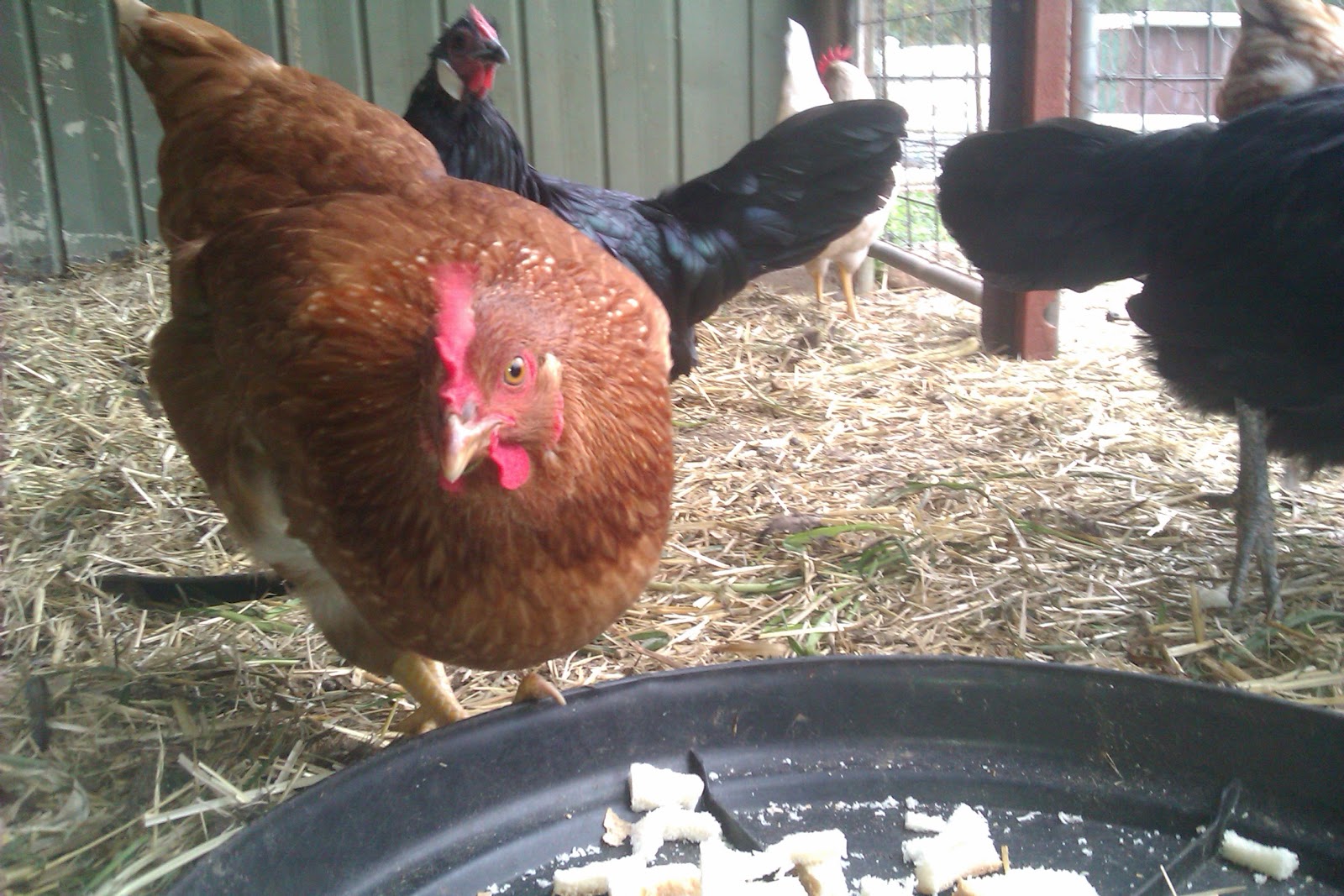
To save the old hens losing too much weight, sleep and feathers, we separated them and moved them yet again. The new hens got four more sisters. It was planned to be three more but I pleaded for a white one as well and got it past SO while he was in a good mood after scrambled eggs on toast. We now (touch wood) get 7 eggs a day from our 7 beautiful commoner, non-purebred, working-class hens. Quiches, cakes and souffles abound.

As spring sprung and the two last Hamburgs stopped their nomadic existence around the various sheds and chicken houses, they settled down, scratched about in the sun and started clucking loudly to announce eggs. From both of them.

Monday, September 24, 2012

The things they teach you in vet school

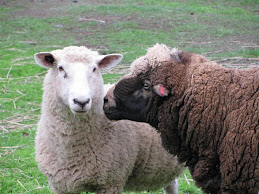
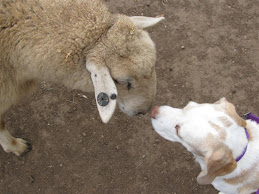
"When introducing adult animals into a new household be prepared for stress and disputes. The best you can hope for is bare tolerance. Introduced animals will probably never actively seek out each others' company.


Each animal will also like their own space, and will need separate beds spaced well apart to reduce tension. Pets are very unlikely to ever share beds without a fight."


When we introduced all our various fully grown cats and dogs in order to co-habit this house we didn't know any of this. Luckily neither did they.